
When I became a first-time manager, the hardest part wasn’t the meetings or the metrics — it was giving feedback. I’d overthink every word, rehearse what to say, and still worry about how it would land. Would they take it the wrong way? Would I sound harsh?
If you’ve ever felt that knot in your stomach before a feedback conversation, you’re not alone. Most new managers struggle with how to give feedback that’s both honest and encouraging. But here’s what I learned through experience: feedback isn’t about correction — it’s about connection.
When done right, feedback builds trust, strengthens relationships, and helps your team grow faster than any training ever could.
Why Feedback Matters for First-Time Managers
Early in my leadership journey, I made the mistake of avoiding tough conversations. I thought staying positive meant being a “good boss.” Instead, I left people confused about where they stood — and performance slipped.
Feedback changes that. When your team knows what’s working and what’s not, they feel supported, not judged. Even constructive criticism, delivered with care, communicates confidence: I believe you can improve, and I’m here to help you do it.
Pro Tip: Schedule regular check-ins (weekly or biweekly) to make feedback normal. The more frequent the conversations, the less intimidating they become.
A Proven Framework: The SBI Model
To make feedback easier and more effective, try using the Situation–Behavior–Impact (SBI) model — a framework developed by the Center for Creative Leadership and used by top organizations worldwide.
Here’s how it works:
- Situation: Describe when and where the behavior occurred.
“In yesterday’s client meeting…” - Behavior: State what you observed, not your opinion.
“…you interrupted twice while the client was speaking.” - Impact: Explain how it affected the outcome or others.
“…it made the client less engaged, and we risked losing their attention.”
This structure keeps your feedback factual, specific, and free from blame — which builds psychological safety.
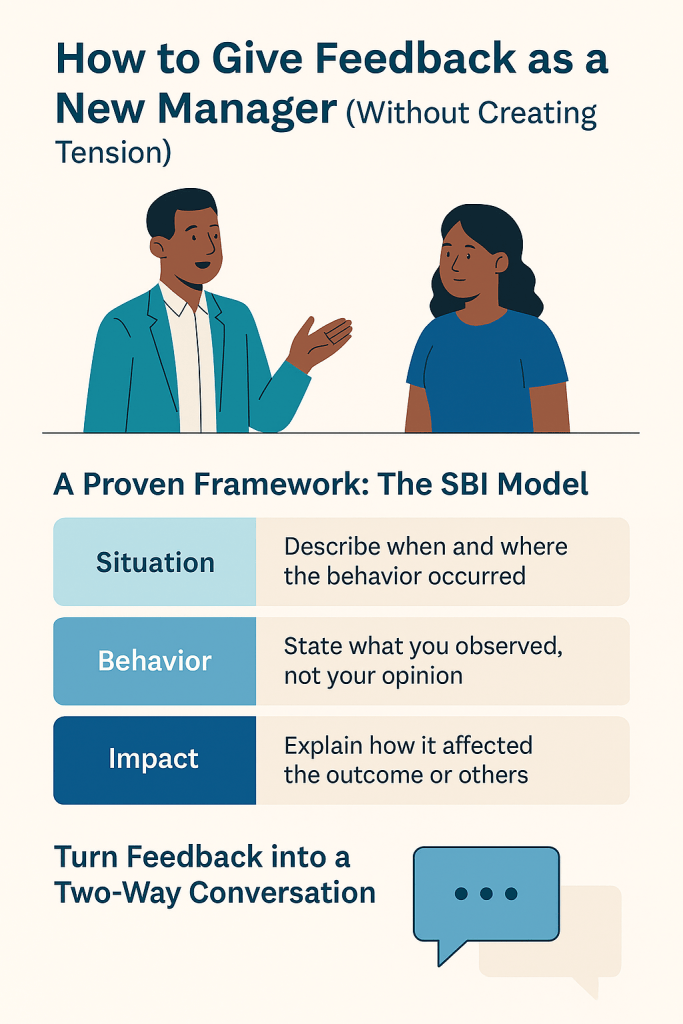
Turn Feedback into a Two-Way Conversation
Great managers don’t deliver feedback at people; they create dialogue. After sharing your perspective, ask open-ended questions like:
- “How do you think that meeting went?”
- “What might you do differently next time?”
- “What kind of support would help you improve here?”
This approach transforms feedback from a performance review into a coaching moment — and coaching is what turns managers into leaders.
When you give positive feedback, be just as detailed. Saying “Great job” feels good, but saying “Your prep work made the presentation flow smoothly and impressed the client” reinforces exactly what you want to see again.
Lead Through Experience, Not Perfection
No one gets feedback perfectly right the first time. I certainly didn’t. But the more I practiced, the more natural it became — and my team started giving me feedback, too. That’s when I knew we’d built real trust.
Remember: feedback isn’t criticism — it’s clarity. And clarity builds confidence, both for you and your team.
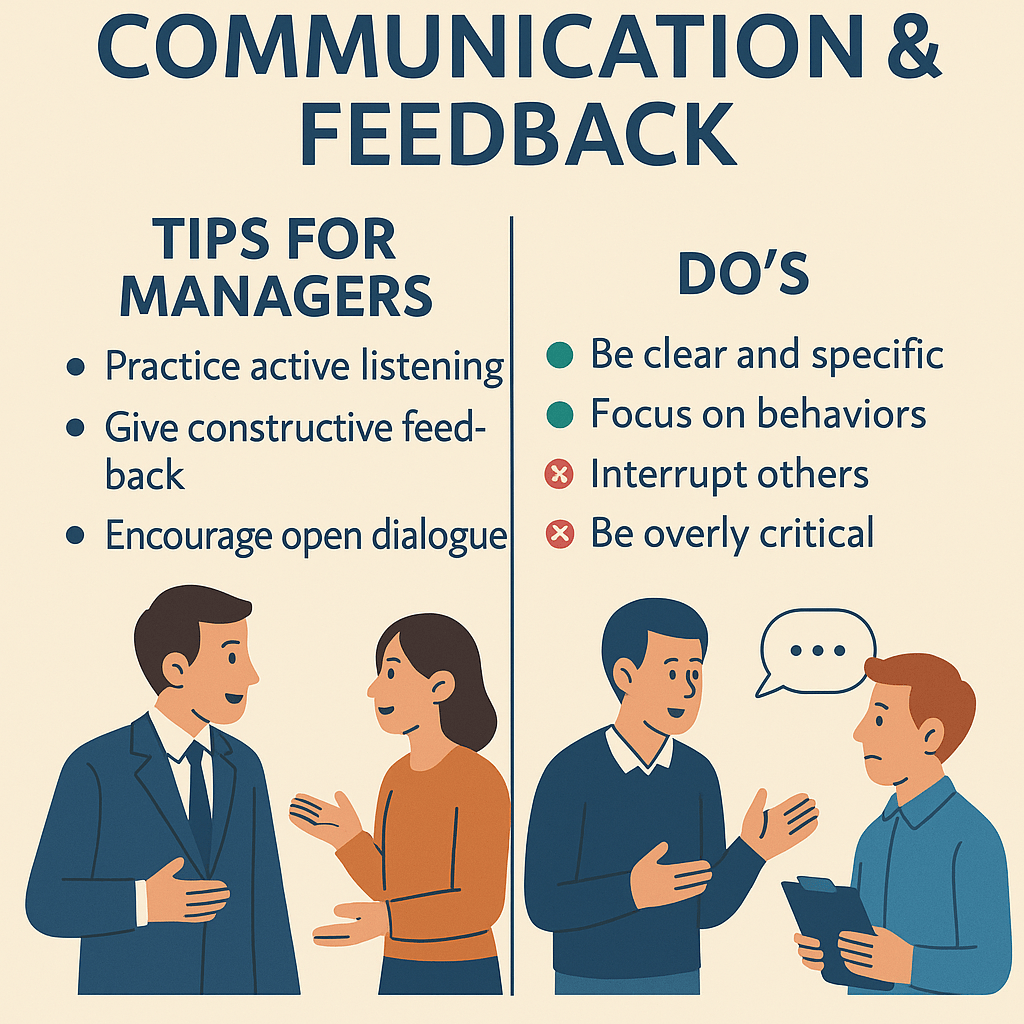
The Everyday Leader Takeaway
Feedback isn’t a skill reserved for senior leaders — it’s the foundation of leadership itself. Start small. This week, use the SBI model to give one piece of clear, caring feedback. Then, reflect on what worked and what didn’t.
Every great leader was once a new manager learning how to communicate better. The difference is that they practiced — every day.
Author: Anthony Nichols
Leadership Director & Mentor for First-Time Managers
At The Everyday Leader, I share lessons learned from over a decade of leading teams, developing new managers, and building cultures of trust.


Leave a Reply