
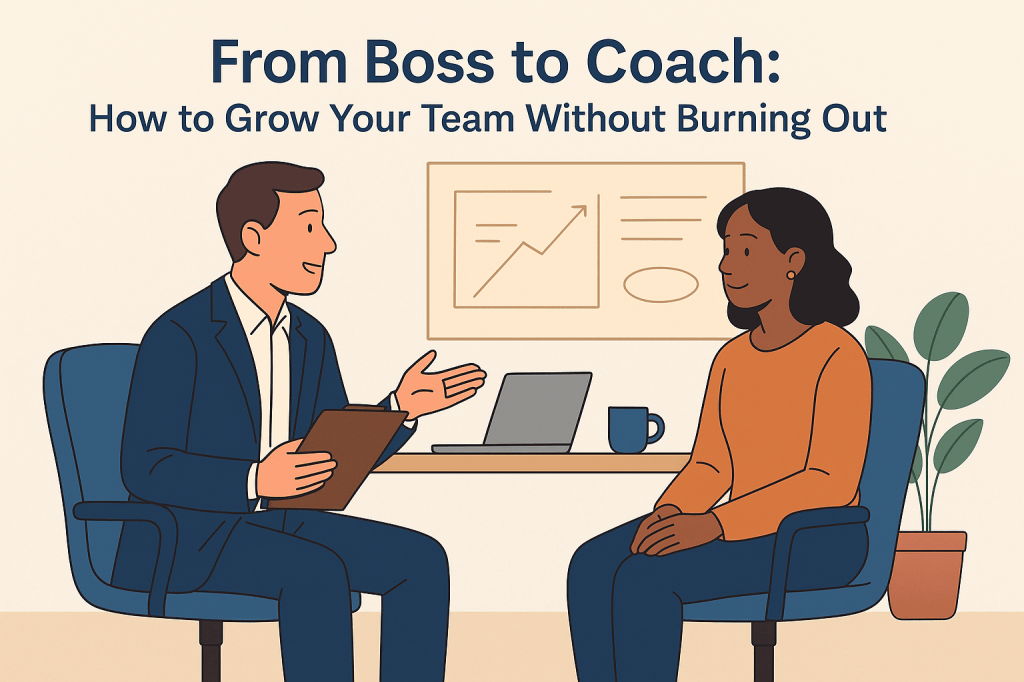
When I first became a manager, I thought leadership meant having all the answers. I spent my days fixing problems, approving every decision, and wondering why I was exhausted by Friday. My team was productive, but I was stretched thin — and worse, no one was growing.
Then a mentor told me something that changed everything:
“Great managers don’t create followers. They create other leaders.”
That was the moment I realized leadership isn’t about control — it’s about coaching.
Why Coaching Beats Command-and-Control
First-time managers often fall into the trap of doing instead of developing. You know the work, you’ve done it well, and it feels faster to just handle things yourself. But when you do that, your team never builds confidence — and you never get to lead strategically.
Coaching flips that script. Instead of telling people what to do, you guide them to find their own solutions. It builds ownership, sharpens problem-solving, and frees you from constant firefighting.
The best part? Your team becomes more capable — and you gain more time and trust.
Use the GROW Model to Structure Coaching Conversations
A proven framework for coaching is the GROW Model, used by leaders and executive coaches around the world. It helps you structure your one-on-ones so they’re developmental, not just status updates.
G – Goal:
Start with what success looks like.
“What would you like to achieve by the end of this project?”
R – Reality:
Discuss where things stand right now.
“What’s working well? What’s getting in the way?”
O – Options:
Explore ideas together.
“What are a few ways you could approach that challenge?”
W – Will:
End with action and accountability.
“What will you commit to doing before our next check-in?”
The GROW model works because it shifts the manager from problem solver to thinking partner. You’re not giving answers — you’re building thinkers.
Make Coaching a Habit, Not an Event
You don’t need to schedule hour-long sessions every week. Coaching can happen in moments — after a meeting, during a project handoff, or when someone asks for your advice. Try this three-step habit:
- Pause before answering. Ask, “What do you think we should do?”
- Guide reflection. Help them connect cause and effect: “Why do you think that happened?”
- Celebrate learning. Recognize effort and insight, not just results.
These micro-coaching moments compound into long-term growth.
The Everyday Leader Takeaway
Coaching isn’t an extra task — it is leadership. When you focus on developing your people, you’ll notice something powerful: your workload lightens, your culture strengthens, and your team starts leading themselves.
So this week, resist the urge to solve the next problem that lands on your desk. Instead, turn it into a coaching moment. Ask one great question — and watch your team rise to the challenge.
Because everyday leaders don’t just manage tasks — they multiply talent.
Author: Anthony Nichols
Leadership Director & Mentor for First-Time Managers
At The Everyday Leader, I share real lessons from over a decade of building teams, mentoring new managers, and helping leaders grow with confidence.


Leave a Reply