
Most workplaces are full of meetings that drain energy — but the 1:1 is different.
It’s one of the most powerful leadership tools you have.
A great 1:1 builds trust, accelerates performance, and creates alignment.
A poor 1:1 feels like a check-the-box chore that neither person gets value from.
The difference?
Structure, intention, and consistency.
Here’s how to turn your 1:1 meetings into one of the strongest drivers of performance on your team.
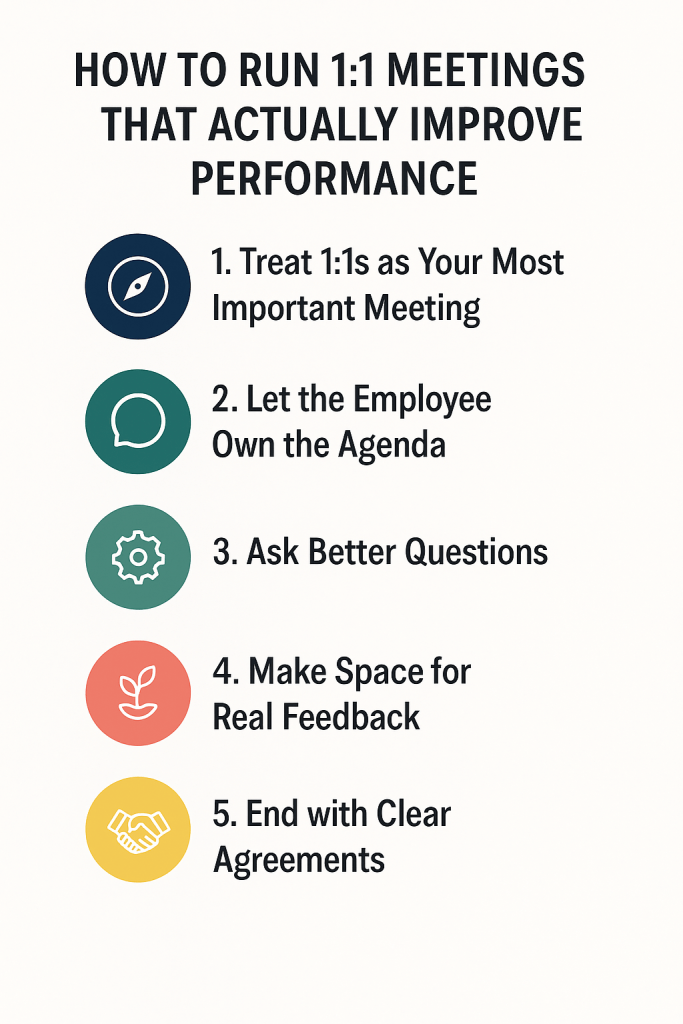
1. Treat 1:1s as Your Most Important Meeting — Not the First to Cancel
Canceling 1:1s sends one message:
“This meeting isn’t important.”
But to your employee, the 1:1 is often the only guaranteed space where they get your undivided attention. Prioritize it, protect it, and show up prepared.
Try saying:
“This is your space — let’s make the most of it.”
That alone shifts the tone.
2. Let the Employee Own the Agenda
A true 1:1 is not a status meeting — it’s a development meeting.
Have your employee build and share a simple agenda before the meeting:
- Wins
- Current challenges
- Priorities
- Questions
- Support needed
When they own the agenda, they take ownership of their performance.
Your agenda simply supplements theirs:
- Strategic updates
- Coaching
- Future goals
- Feedback (positive + constructive)
3. Ask Better Questions — They Unlock Better Performance
The quality of your questions determines the depth of the conversation.
Here are powerful ones to use regularly:
- “What’s one thing you’re proud of from this week?”
- “What’s currently slowing you down?”
- “Where do you feel unclear or stuck?”
- “What’s a recent win we can build on?”
- “What skill are you trying to grow right now?”
- “How can I support you better?”
These move the conversation from surface-level updates to meaningful coaching.
4. Make Space for Real Feedback — Both Ways
A 1:1 is the safest place to share feedback because it’s private, focused, and personal.
Give balanced feedback using context → observation → impact → next step:
“In yesterday’s briefing, I noticed X. It created Y impact. Let’s try Z next time.”
Then ask:
“And what feedback do you have for me?”
This builds trust and healthy communication.
5. End With Clear Agreements — Not Assumptions
Too many 1:1s end with “Great chat!”
…but nothing changes.
Instead, end with clarity:
- What is the employee committing to?
- What are you committing to?
- What deadlines or checkpoints align with those commitments?
Document action items in writing. This ensures accountability and eliminates confusion.
The Everyday Leader Takeaway
A great 1:1 isn’t about talking — it’s about connecting.
It’s where expectations get clear, performance gets supported, and people feel seen.
When you consistently show up with curiosity, alignment, and structure, your team doesn’t just perform better —
they trust you more, grow faster, and feel genuinely supported.
Because everyday leaders don’t just manage people.
They develop them — one conversation at a time.


Leave a Reply