
One of the hardest parts of becoming a manager is learning how to sort through competing priorities. Between emails, meetings, staffing issues, deadlines, and unexpected problems, it can feel like everything is urgent and nothing can wait.
But here’s the truth:
If everything is a priority, then nothing truly is.
High-performing managers don’t get more hours in the day — they get better at choosing what matters most. They shift from reactive to intentional. They move their team from busy to focused.
Here’s a simple, practical approach to setting priorities when the noise is loud, the pressure is high, and the stakes feel real.
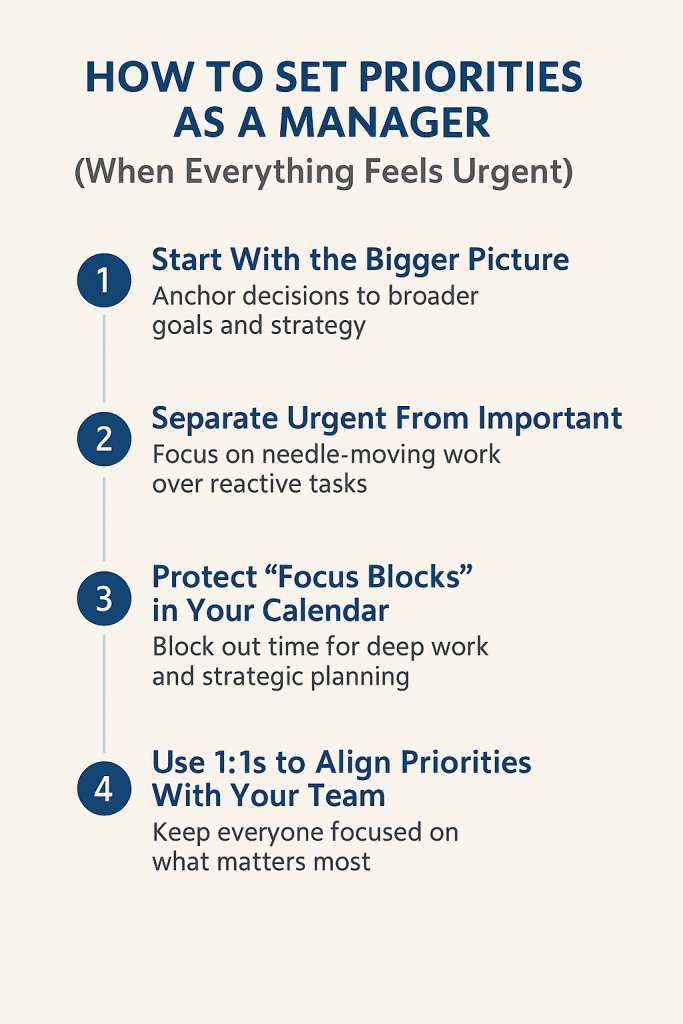
1. Start With the Bigger Picture: What Actually Matters?
Before you decide what needs attention today, zoom out.
Ask yourself:
- What are this quarter’s top goals?
- What needle-moving work supports those goals?
- What tasks feel urgent but don’t drive results?
When you anchor decisions to strategy instead of stress, your priorities get clearer — fast.
Try saying:
“If I could only accomplish three things this week that move us forward, what would they be?”
Those become your real priorities.
2. Separate Urgent From Important
Use a simple matrix:
- Urgent + Important: Do first
- Important, Not Urgent: Schedule
- Urgent, Not Important: Delegate
- Neither: Remove
New managers often get trapped in the urgent-but-not-important zone — answering every ping, reacting to every issue, living in everyone else’s priorities.
Important work is strategic. It’s proactive. It strengthens the team over time.
Urgent work gets attention.
Important work gets results.
3. Protect “Focus Blocks” in Your Calendar
Managers who don’t protect their time end up working on priorities only when the day is almost over — or after hours.
Try blocking:
- 60–90 minutes in the morning for deep work
- 1–2 hours weekly for planning and strategic thinking
- A weekly “no meetings” period
One protected hour can be more productive than an entire reactive day.
4. Use 1:1s to Align Priorities With Your Team
Don’t carry prioritization alone. Bring your team into it.
Use 1:1s to clarify:
- “Here’s what matters most this week.”
- “Here’s what we can pause or stop.”
- “Here’s what I need you focused on first.”
When everyone knows the plan, nobody wastes energy on the wrong work.
Alignment reduces rework — and stress.
5. Accept That Not Everything Will Get Done — and That’s Okay
A secret of experienced leaders:
Not every task deserves your time.
Good managers do the most important things well.
Great managers help their team do the right important things well.
Let go of perfection.
Let go of doing everything yourself.
Let go of the pressure to be everywhere at once.
Leading with clarity beats leading with busyness every time.
The Everyday Leader Takeaway
Priority-setting isn’t about doing more — it’s about doing what matters.
When you zoom out, separate urgent from important, protect your focus time, align your team, and give yourself permission not to do everything…
…you shift from a reactive manager into a strategic leader.
Because everyday leaders don’t chase every fire.
They choose what truly moves the team forward.


Leave a Reply