
One of the easiest habits to develop as a new manager is answering every question that comes your way.
Someone gets stuck. You explain what to do. The problem gets solved, and everyone moves on.
Until the next question.
Before long, your day fills with decisions your team is waiting for you to make. Your own work gets pushed back, and you start wondering why people aren’t taking more ownership.
It’s worth looking at the habit you may have helped create.
When we consistently provide the answer, people can become accustomed to waiting for it.
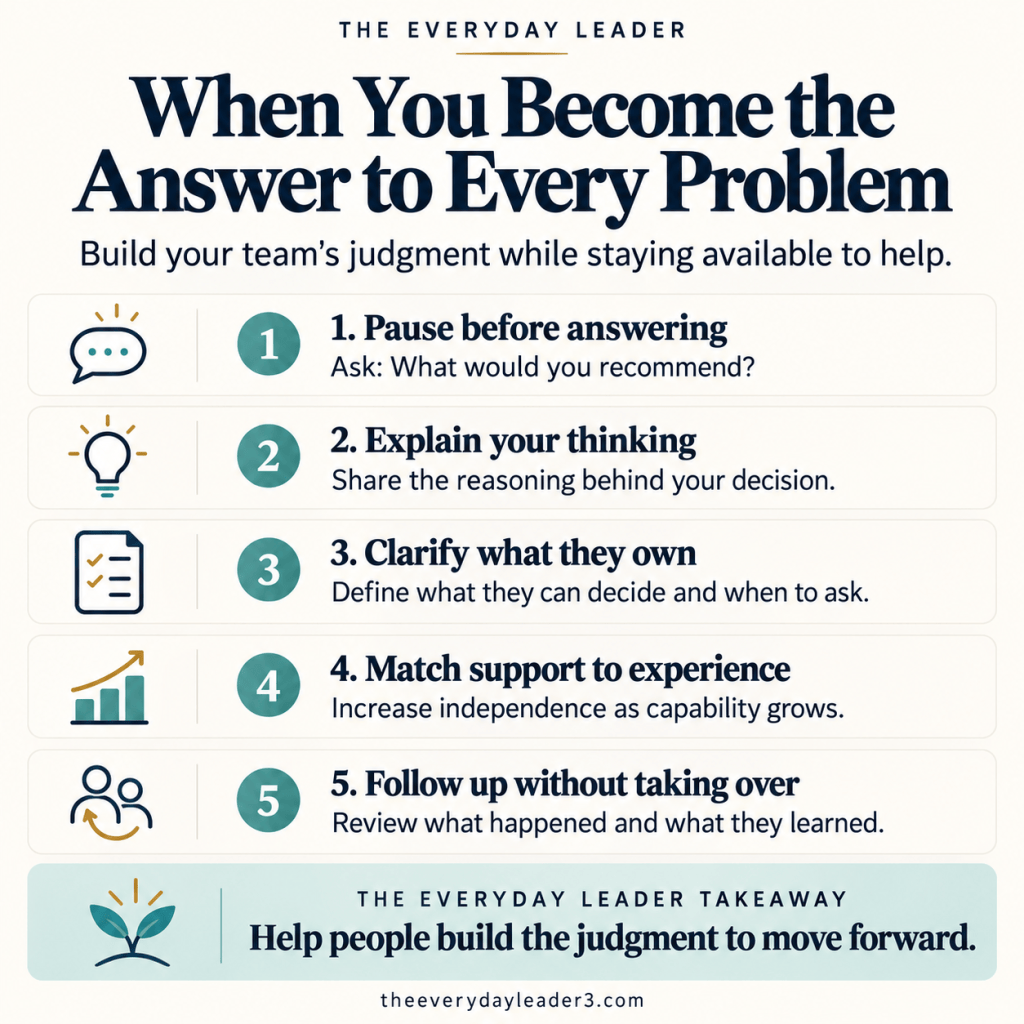
Here are five ways to help your team develop better judgment while staying available to support them.
1. Pause Before Providing the Answer
When you know how to solve something, jumping in feels efficient.
But that quick answer can take away an opportunity for someone else to think.
Before offering your recommendation, ask:
- “What have you tried so far?”
- “What do you think is causing this?”
- “What would you recommend?”
Listen before correcting or redirecting.
You may discover that the person already has a reasonable solution and simply needs confidence to act.
Give yourself a chance to understand their thinking before adding your own.
2. Make Your Thinking Visible
Experience helps you recognize patterns that newer team members haven’t encountered yet.
What feels obvious to you may be unfamiliar to them.
When you do provide direction, explain how you reached the decision:
- What information mattered most?
- What risks did you consider?
- What made one option stronger than another?
For example:
“I’d call the client first because we’re missing information that could change our response. Once we understand what happened, we can decide what to offer.”
That explanation gives someone a process they can apply again.
An answer solves the immediate issue. Explaining your reasoning helps develop judgment.
3. Clarify Which Decisions They Own
It’s difficult to expect initiative when people aren’t sure what they’re allowed to decide.
Someone may understand the problem and have a good recommendation but still hesitate because they’re worried about overstepping.
Be clear about:
- Decisions they can make independently
- Situations where they should consult you
- Issues that require immediate escalation
You can also establish simple boundaries:
“You can adjust the approach within the agreed budget. Bring me in if the cost increases or the client commitment changes.”
Clear authority makes ownership easier to practice.
4. Match Your Support to Their Experience
People need different levels of guidance.
A new team member may need you to work through the options alongside them. Someone with more experience may only need a brief conversation before moving forward.
Ask yourself:
- Have they handled something like this before?
- Do they have the information and resources they need?
- What could happen if the decision goes poorly?
For urgent situations involving safety or serious consequences, provide direction promptly. Explain the reasoning once the immediate issue is handled.
For routine decisions, give people room to work through the problem.
Increase independence as their capability grows.
5. Follow Up Without Taking the Problem Back
Coaching doesn’t end when someone chooses a next step.
Agree on who will act, what they will do, and when you’ll reconnect.
Then ask:
- “What happened?”
- “What did you learn?”
- “What would you do differently next time?”
If the outcome disappoints, examine the decision together. A reasonable choice can still produce an unexpected result.
Your response matters. If every mistake leads to you taking over, people may become reluctant to act independently.
Keep support available while allowing them to own the next step.
The Everyday Leader Takeaway
Developing a team that solves problems takes patience—and a willingness to examine our own habits.
Start with the next question someone brings you.
Pause before answering.
Ask for their recommendation.
Explain your reasoning.
Clarify what they own.
Follow up on what they learned.
You can be available, supportive, and involved while giving people room to think.
Everyday leaders help their teams build the judgment to move forward—even when the leader isn’t in the room.


Leave a Reply