
One of the most frustrating parts of being a new manager is feeling like your day is no longer yours. Emails pile up. Slack messages interrupt constantly. Small issues turn into urgent problems. And before you know it, you’re reacting all day — without making progress on what actually matters.
If this sounds familiar, you’re not failing.
You’re operating without enough structure.
Great leaders don’t eliminate reactivity entirely — but they contain it.
They build systems that protect focus, reduce chaos, and create space to lead.
Here’s a simple framework to help you move from reactive to intentional — even when things feel busy.
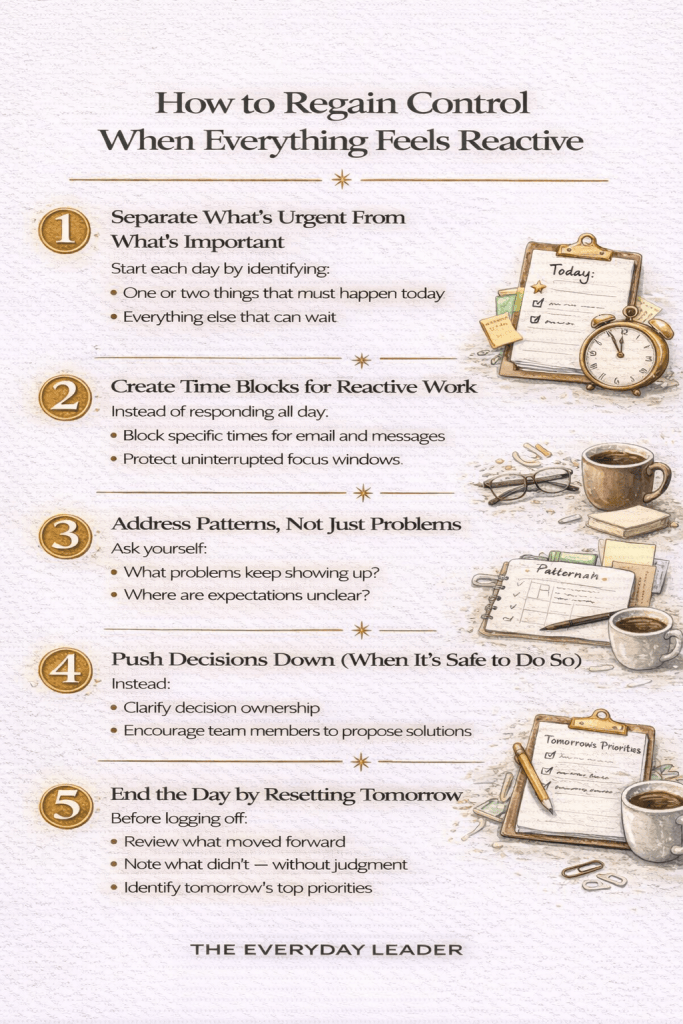
1. Separate What’s Urgent From What’s Important
When everything feels urgent, nothing is truly prioritized.
Start each day by identifying:
- One or two things that must happen today
- Everything else that can wait
Urgent issues demand attention.
Important work deserves protection.
Clarity here immediately reduces stress.
2. Create Time Blocks for Reactive Work
Reactivity becomes overwhelming when it’s uncontained.
Instead of responding all day:
- Block specific times for email and messages
- Let your team know when you’ll be responsive
- Protect uninterrupted focus windows
Containment turns chaos into something manageable.
3. Address Patterns, Not Just Problems
Many reactive issues are signals — not surprises.
Ask yourself:
- What problems keep showing up?
- Where are expectations unclear?
- What decisions are bottlenecked with me?
Fixing root causes reduces future reactivity far more than quick responses ever will.
4. Push Decisions Down (When It’s Safe to Do So)
New managers often absorb decisions because it feels faster.
But long-term, this creates overload.
Instead:
- Clarify decision ownership
- Encourage team members to propose solutions
- Reserve your input for high-impact calls
Empowerment reduces interruptions — and builds capability.
5. End the Day by Resetting Tomorrow
Reactivity often spills over because days end abruptly.
Before logging off:
- Review what moved forward
- Note what didn’t — without judgment
- Identify tomorrow’s top priorities
Closing the loop gives your brain permission to rest — and helps you start the next day with intention.
The Everyday Leader Takeaway
Feeling reactive doesn’t mean you lack discipline.
It usually means you lack structure.
When you:
Clarify priorities,
Contain reactive work,
Solve patterns instead of symptoms,
Share decision ownership, and
Reset intentionally…
You move from surviving the day to leading it.
Because everyday leaders don’t eliminate chaos.
They design systems that keep it from running the show.


Leave a Reply