
One of the hardest moments for a new manager is realizing that someone on the team is underperforming. It can feel uncomfortable, personal, and even intimidating. But here’s the truth:
Underperformance is not a verdict — it’s a signal.
It’s a sign that something in the system, expectations, clarity, or support isn’t aligned. And when handled with calm honesty and genuine care, coaching an underperforming employee can become one of the most meaningful leadership moments you’ll ever experience.
Your goal isn’t to criticize — it’s to unlock improvement without harming confidence or trust.
Here’s exactly how to do that.
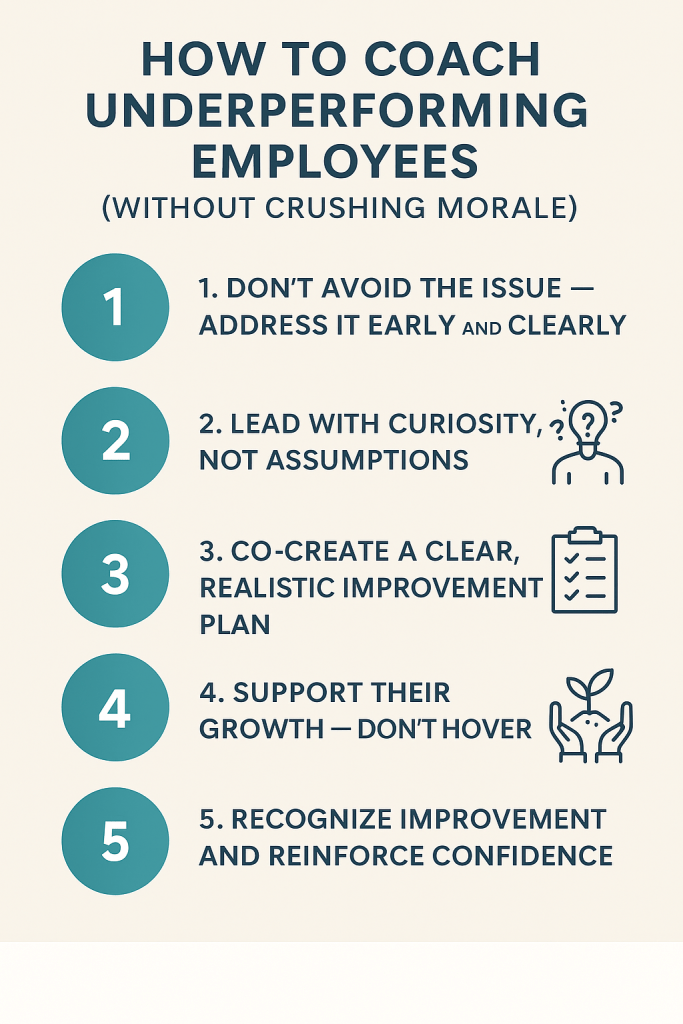
1. Don’t Avoid the Issue — Address It Early and Clearly
Most performance problems get worse because managers hope they’ll “fix themselves.” But silence creates ambiguity, and ambiguity creates frustration.
Address the issue early, while it’s still small. Keep it simple and factual:
“I’ve noticed a drop in accuracy over the past three weeks. I want to check in and understand what’s going on.”
When you speak early, the conversation feels supportive — not punitive.
2. Lead With Curiosity, Not Assumptions
Underperformance usually has a root cause, and it’s rarely laziness.
Common drivers include:
- Lack of clarity
- Conflicting priorities
- Burnout or overwhelm
- Skills gaps
- Personal challenges
- Broken processes
Ask open questions to understand what’s behind the dip:
- “What feels most challenging right now?”
- “What’s getting in the way?”
- “Is anything unclear or unrealistic about expectations?”
When people feel understood, their willingness to improve skyrockets.
3. Co-Create a Clear, Realistic Improvement Plan
Avoid vague directions like, “You need to step it up.” They don’t help anyone.
Instead, collaborate on a specific plan:
- What improvement looks like
- How progress will be measured
- What support you’ll provide
- When you’ll check in
Try saying:
“Here’s what success looks like. Let’s build a plan together that helps you get there.”
This creates ownership, not pressure.
4. Support Their Growth — Don’t Hover
Support doesn’t mean micromanaging. It means:
- Checking in consistently
- Offering feedback early
- Removing roadblocks
- Providing training or resources
- Celebrating small wins
You’re not fixing the problem for them — you’re enabling them to succeed.
5. Recognize Improvement and Reinforce Confidence
When someone is struggling, even small progress matters. Recognition builds momentum and helps them believe change is possible.
Try this:
“I noticed how much smoother today’s handoff process was — keep going.”
Confidence fuels performance.
Silence fuels doubt.
The Everyday Leader Takeaway
Coaching an underperforming employee is not about pointing out faults — it’s about helping someone rise.
When you:
- Address issues early,
- Lead with curiosity,
- Build a clear plan,
- Support progress, and
- Celebrate improvement…
…you don’t just correct performance.
You strengthen trust, loyalty, and long-term growth.
Because everyday leaders don’t give up on people.
They help people rise to their potential.


Leave a Reply