
One of the biggest mindset shifts for first-time managers is learning how to hold people accountable in a way that feels fair, healthy, and consistent — not harsh or uncomfortable.
Most new managers avoid accountability conversations because they don’t want to be “too tough,” harm morale, or create conflict.
But accountability isn’t punishment.
It’s clarity.
It’s follow-through.
It’s care for the team and the work.
Here’s a simple framework to build accountability that strengthens trust, not tension.
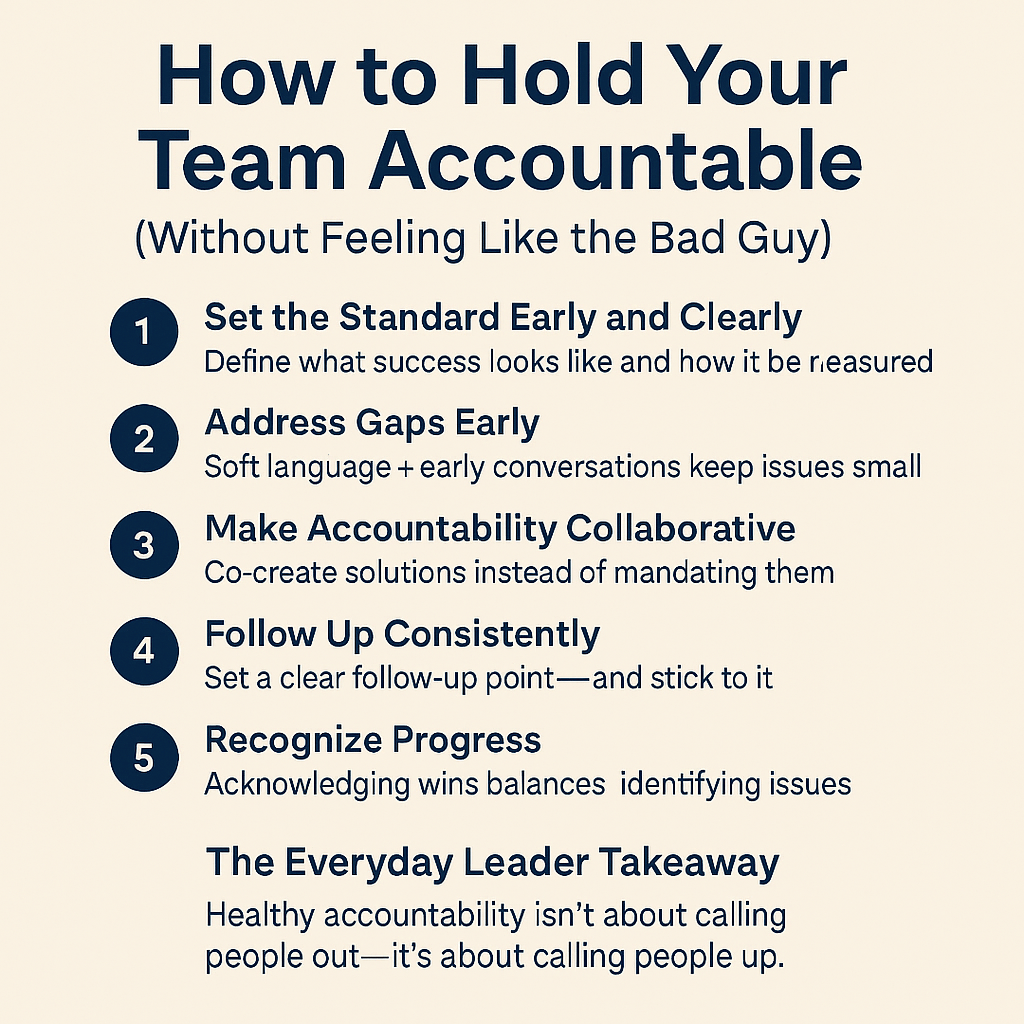
1. Set the Standard Early and Clearly
You can’t hold someone accountable to expectations they never understood.
Clarify:
- What success looks like
- What the non-negotiables are
- How performance will be measured
- When check-ins will happen
Accountability is almost effortless when the baseline is clear.
2. Address Gaps Early — Don’t Wait
Small issues become big issues when managers hesitate.
Instead of waiting until you’re frustrated, use simple, early language:
- “I noticed a gap here — can we walk through it together?”
- “This didn’t land the way we expected. Let’s realign.”
Early conversations prevent escalation — and they feel easier for everyone involved.
3. Make Accountability Collaborative, Not Top-Down
Accountability works best when the employee participates in the solution.
Ask:
- “What do you think got in the way?”
- “What part should we adjust — the process or the approach?”
- “What support would help you move forward?”
People commit more deeply to plans they helped build.
4. Follow Up With Consistency (The Hardest Part)
Accountability fails without follow-through.
Set a clear follow-up point:
- “Let’s regroup next Thursday.”
- “Send me an update by the end of the week.”
- “We’ll check progress in our next 1:1.”
Consistency shows that expectations matter — and that you’re invested in improvement.
5. Recognize Progress Just as Clearly as Problems
Accountability isn’t just about identifying gaps.
It’s about acknowledging effort, course correction, and wins.
Say:
- “I can see you put real effort into this.”
- “You made a clear improvement in ___.”
- “Thank you for addressing this quickly.”
Balanced accountability builds confidence and momentum.
The Everyday Leader Takeaway
Healthy accountability is not about calling people out — it’s about calling people up.
When you:
Set clear standards,
Address gaps early,
Co-create solutions,
Follow up consistently, and
Recognize progress…
You build a culture where people own their work because they feel supported, not scared.
Because everyday leaders don’t enforce accountability —
they inspire it.


Leave a Reply