
One of the most uncomfortable transitions into management is leading people who used to be your peers.
Yesterday, you were teammates. Today, you’re setting direction, giving feedback, and making decisions that affect them.
If it feels awkward, tense, or emotionally loaded — you’re not doing anything wrong.
This transition is hard because it changes relationships, not just responsibilities.
The good news? You don’t need to overcorrect or distance yourself to lead well.
You just need clarity, consistency, and a steady approach.
Here’s a simple framework to help you lead former peers with confidence and respect.
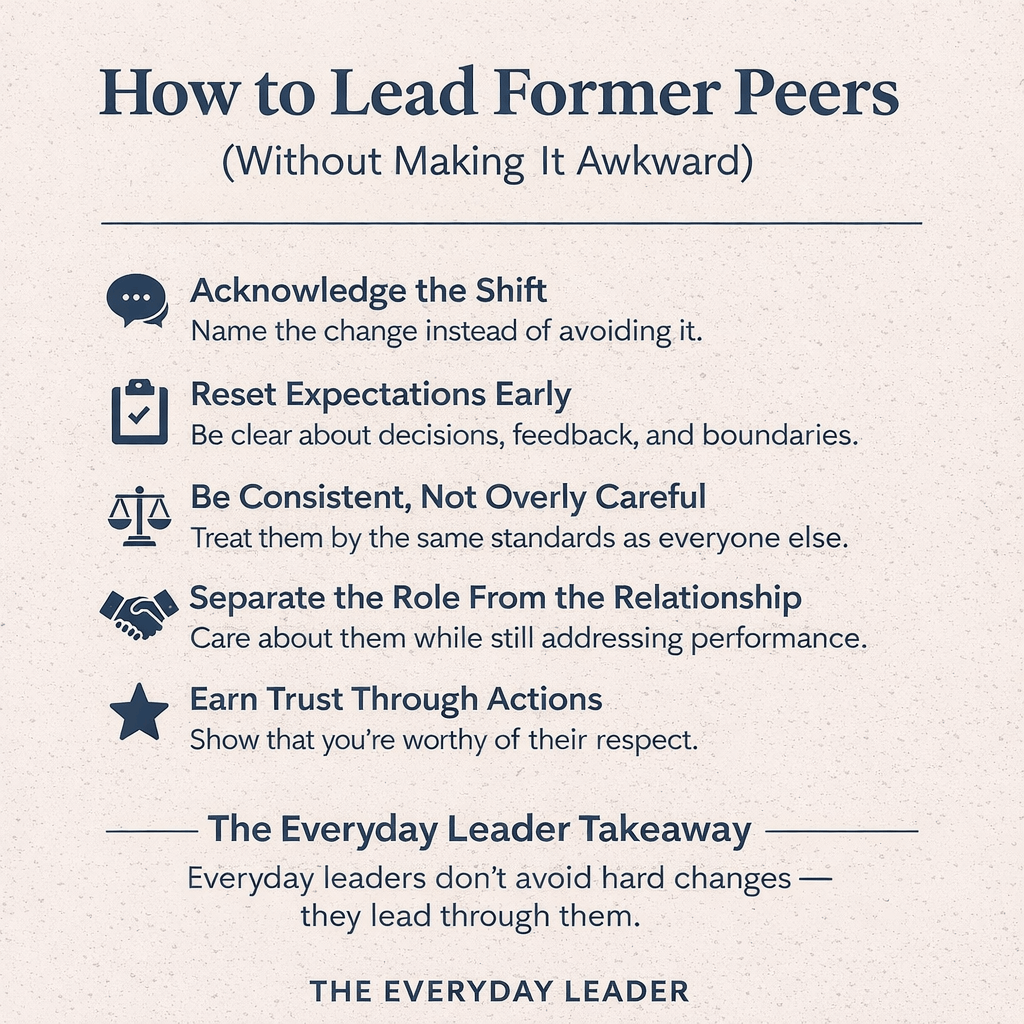
1. Acknowledge the Shift Instead of Pretending It Didn’t Happen
The fastest way to create discomfort is to avoid naming the change.
You don’t need a dramatic speech — just a simple acknowledgment:
- “I know this is a shift for all of us.”
- “Our roles have changed, and I want to handle that well.”
Naming the transition builds trust.
Ignoring it creates unspoken tension.
2. Reset Expectations Early and Clearly
Old dynamics don’t automatically disappear when titles change.
Be clear about:
- Decision-making authority
- Communication expectations
- Boundaries between friendship and responsibility
- How feedback will work moving forward
Clarity prevents resentment — especially when expectations are tested later.
3. Be Consistent, Not Overly Careful
Many new managers try to be extra gentle with former peers.
That often backfires.
Inconsistency feels unfair, even when it’s well-intentioned.
Treat everyone by the same standards:
- Same feedback approach
- Same accountability
- Same follow-up
Fairness builds credibility faster than friendliness ever will.
4. Separate the Role From the Relationship
You can still care about people — while leading them.
This sounds like:
- “I value our relationship and I need to address this.”
- “This feedback is about the work, not you.”
Strong leaders don’t avoid hard moments to protect relationships.
They handle hard moments well to preserve them.
5. Earn Trust Through Actions, Not Authority
Your title doesn’t earn respect — your behavior does.
Build trust by:
- Making thoughtful decisions
- Listening before reacting
- Following through consistently
- Supporting your team publicly
- Holding everyone to the same bar
Over time, your peers stop seeing you as “the one who got promoted” — and start seeing you as their leader.
The Everyday Leader Takeaway
Leading former peers isn’t about proving yourself or changing who you are.
It’s about showing up with clarity, fairness, and steadiness — even when it feels uncomfortable.
When you:
Acknowledge the shift,
Set clear expectations,
Lead consistently,
Separate role from relationship, and
Earn trust through action…
You turn an awkward transition into a strong foundation.
Because everyday leaders don’t avoid hard changes.
They lead through them — calmly and intentionally.


Leave a Reply