One of the fastest ways new managers accidentally hurt their teams is by overloading their strongest performers.
When someone is reliable, capable, and consistently delivers, it’s tempting to give them more — more work, more responsibility, more pressure.
It usually comes from a good place.
You trust them. You want to reward them. You need results.
But without intention, high performers don’t burn out because they’re weak — they burn out because they’re over-relied on.
Here’s a simple framework to help you support, grow, and retain your strongest people without exhausting them.
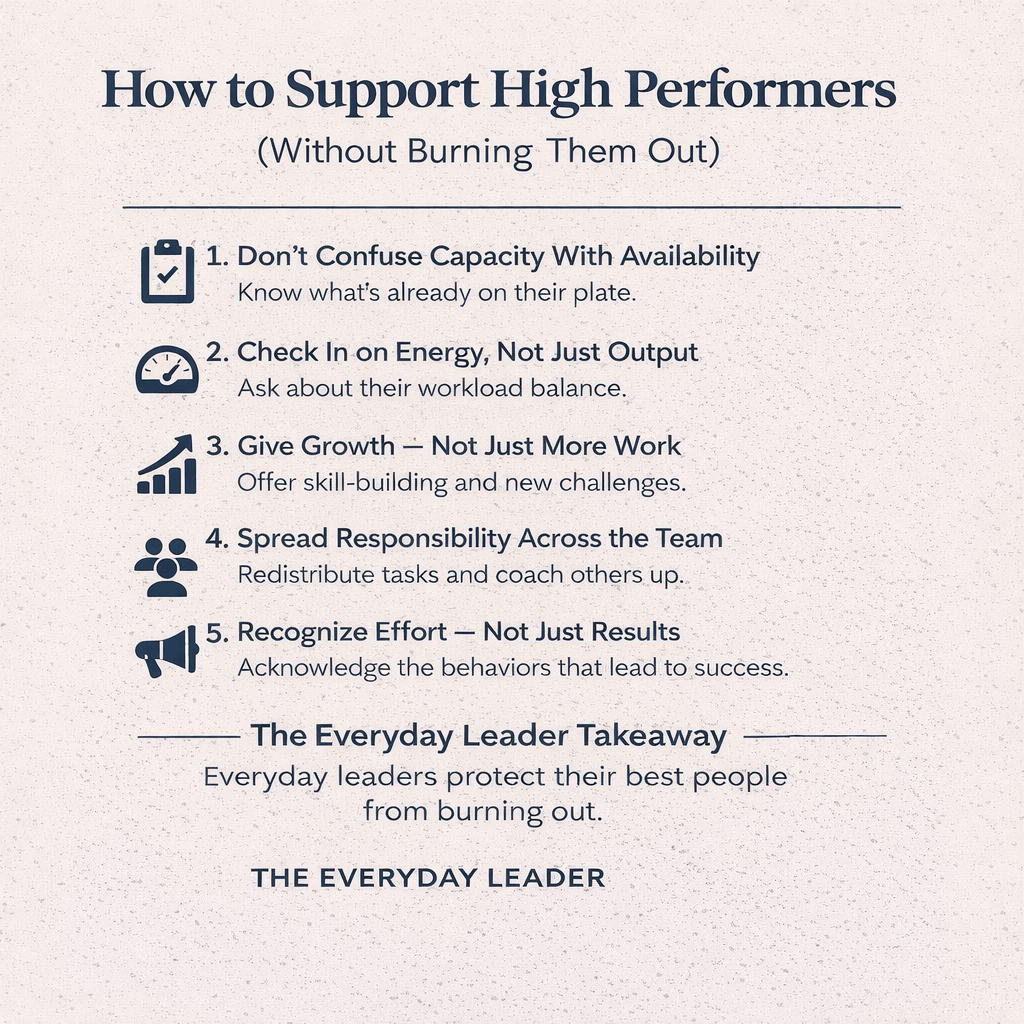
1. Don’t Confuse Capacity With Availability
High performers often finish work faster and with higher quality.
That doesn’t mean they have unlimited capacity.
Before assigning more, ask:
- “What’s currently on your plate?”
- “What would this replace?”
- “What would need to shift to make this sustainable?”
Strong leaders protect their best people from becoming the team’s safety net.
2. Check In on Energy, Not Just Output
High performers are often the least likely to speak up when they’re overwhelmed.
Make space for conversations like:
- “How does your workload feel right now?”
- “What’s draining your energy?”
- “What’s energizing you lately?”
Burnout shows up emotionally before it shows up in performance.
3. Give Growth — Not Just More Work
More work isn’t development.
Different work is.
Support growth by offering:
- Stretch projects with clear boundaries
- Opportunities to mentor others
- Exposure to decision-making or strategy
- Skill-building aligned with their goals
High performers stay engaged when they’re learning — not just producing.
4. Spread Responsibility Across the Team
When one or two people carry the load, everyone else stalls.
Instead:
- Redistribute tasks intentionally
- Coach others up to take ownership
- Use your high performers as teachers, not crutches
This protects your strongest contributors and raises the bar for the whole team.
5. Recognize Effort — Not Just Results
High performers often feel invisible because excellence becomes expected.
Recognition doesn’t need to be grand. It needs to be specific:
- “I noticed how you handled that situation.”
- “Your consistency makes a real difference.”
- “Thank you for setting the standard.”
Feeling seen is one of the strongest buffers against burnout.
The Everyday Leader Takeaway
Supporting high performers isn’t about squeezing more out of them — it’s about helping them thrive long-term.
When you:
Respect capacity,
Check in on energy,
Offer meaningful growth,
Share responsibility, and
Recognize effort…
You keep your best people engaged, healthy, and committed.
Because everyday leaders don’t burn out their strongest contributors.
They build environments where excellence is sustainable.


Leave a Reply