
One of the trickiest balances for new managers is knowing how to follow up on work without hovering.
You don’t want to disappear and seem disengaged — but you also don’t want to check in so often that it feels like micromanagement.
Most managers swing too far in one direction:
Either they over-check and create pressure… or they avoid follow-up altogether and get surprised later.
The goal isn’t control.
It’s visibility, alignment, and trust.
Here’s a simple framework to help you follow up in a way that supports your team — without getting in their way.
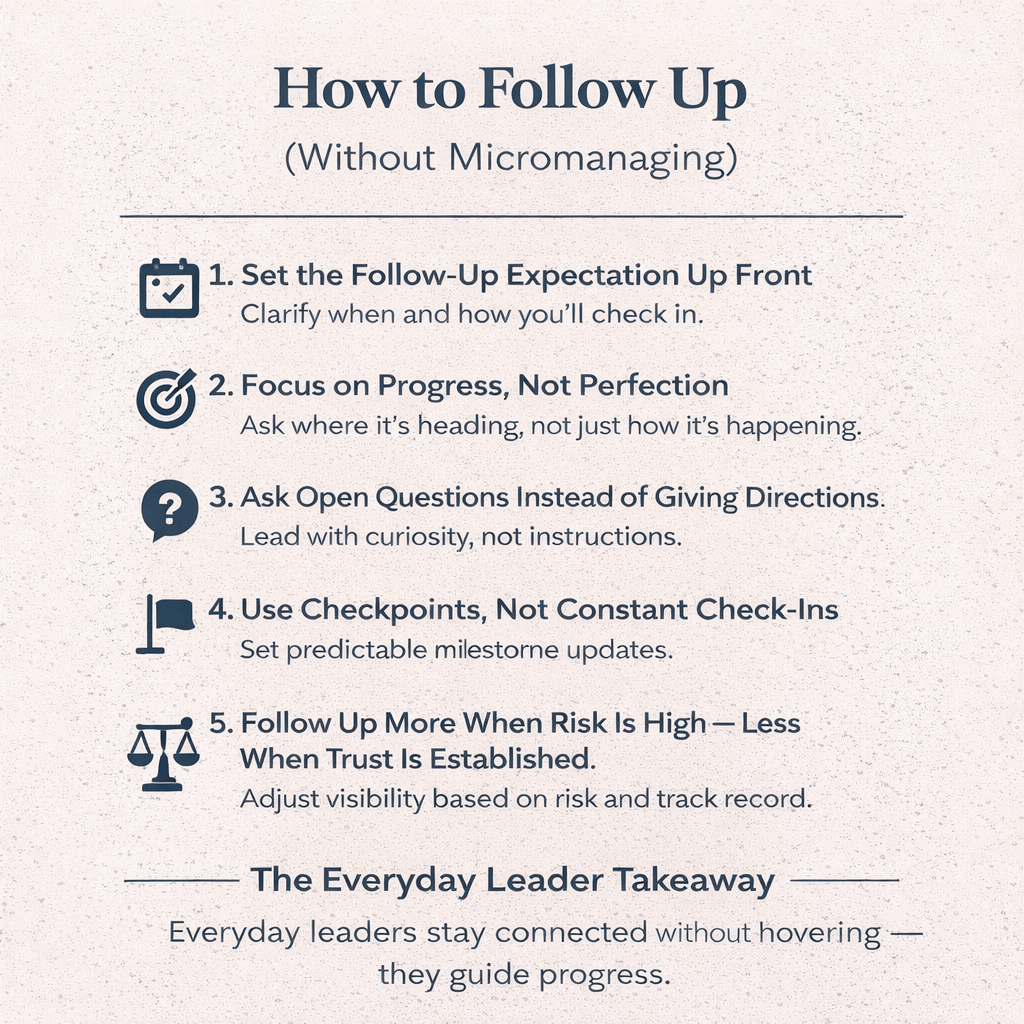
1. Set the Follow-Up Expectation Up Front
Follow-up only feels intrusive when it’s unexpected.
At the start of any task or project, clarify:
- When you’ll check in
- What kind of update you expect
- How progress should be communicated
For example:
“Let’s do a quick check-in on Thursday to make sure we’re on track.”
When expectations are set early, follow-up feels normal — not controlling.
2. Focus on Progress, Not Perfection
Micromanagement creeps in when managers fixate on how the work is being done instead of where it’s heading.
During follow-up, ask:
- “How is this progressing?”
- “What’s on track?”
- “What’s getting in the way?”
You’re looking for movement and obstacles — not minor details.
3. Ask Open Questions Instead of Giving Directions
The fastest way to turn follow-up into micromanagement is by jumping straight to instructions.
Instead, lead with curiosity:
- “What’s your plan for the next step?”
- “What options are you considering?”
- “What support would help most right now?”
This keeps ownership with the team member — and positions you as a coach, not a checker.
4. Use Checkpoints, Not Constant Check-Ins
Frequent, unplanned check-ins signal a lack of trust.
Replace them with:
- Agreed-upon milestones
- Weekly or biweekly updates
- Brief status notes
Predictable checkpoints create clarity and reduce anxiety — for both you and your team.
5. Follow Up More When Risk Is High — Less When Trust Is Established
Not every task needs the same level of oversight.
Increase follow-up when:
- The work is new
- Stakes are high
- Deadlines are tight
Pull back when:
- The person has a strong track record
- Expectations are clear
- Progress is steady
Adjusting your follow-up shows judgment — not favoritism.
The Everyday Leader Takeaway
Following up isn’t about hovering.
It’s about staying connected without taking over.
When you:
Set expectations early,
Focus on progress,
Ask open questions,
Create predictable checkpoints, and
Adjust based on risk and trust…
You give your team the structure they need — and the space they deserve.
Because everyday leaders don’t micromanage progress.
They guide it.


Leave a Reply