
Christmas is often seen as a pause — a moment to step back from goals, deadlines, and performance metrics. But for leaders, it’s also one of the most meaningful opportunities of the year.
An opportunity to say thank you — not as a formality, but with intention.
Too often, appreciation gets bundled into bonuses, annual reviews, or quick end-of-year notes. But genuine gratitude isn’t about transactions.
It’s about recognition.
It’s about presence.
It’s about seeing people for the effort they bring — especially when no one is watching.
Here’s a simple framework for using gratitude as a leadership practice — not just a holiday gesture.
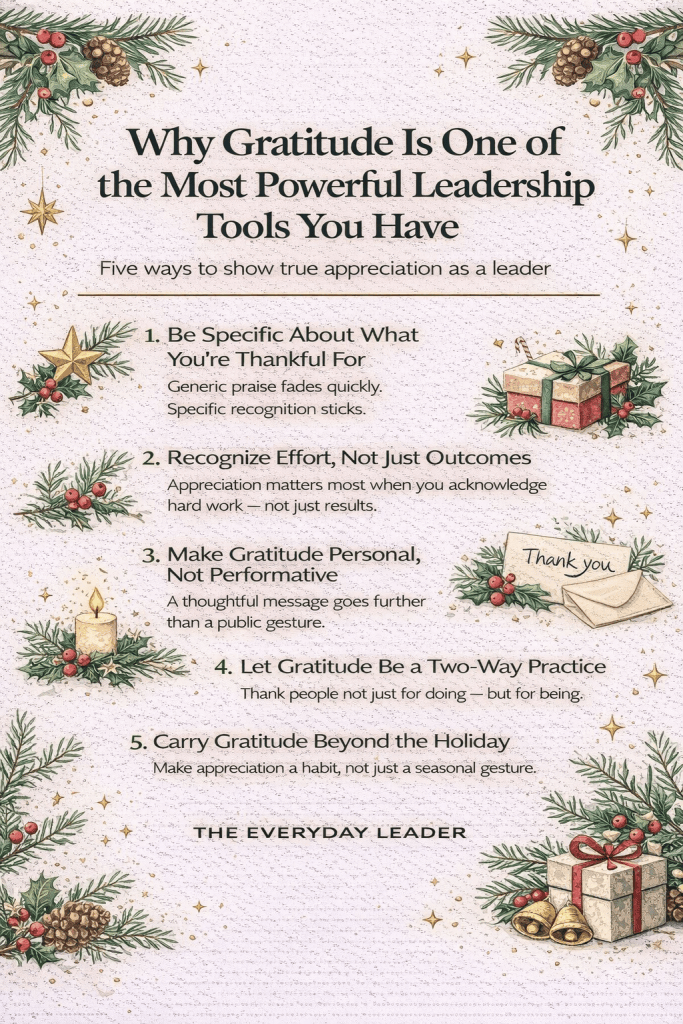
1. Be Specific About What You’re Thankful For
Generic praise fades quickly.
Specific recognition sticks.
Instead of:
“Thanks for all your hard work this year.”
Try:
- “Thank you for how you supported the team during a tough stretch.”
- “I appreciate the consistency you bring, even when things get messy.”
- “Your attention to detail made a real difference on that project.”
Specific gratitude tells people they are seen — not just acknowledged.
2. Recognize Effort, Not Just Outcomes
Many contributions never show up in dashboards or metrics.
Gratitude matters most when you recognize:
- Persistence during uncertainty
- Emotional labor and support
- Quiet leadership behind the scenes
- Reliability when things didn’t go as planned
When leaders only thank results, people learn that effort doesn’t matter.
When leaders thank effort, people feel valued — even when outcomes fall short.
3. Make Gratitude Personal, Not Performative
Public recognition has its place.
But the most meaningful appreciation is often private.
A thoughtful message.
A short note.
A genuine conversation.
Gratitude doesn’t need an audience to be impactful.
It needs sincerity.
4. Let Gratitude Be a Two-Way Practice
Great leaders don’t just thank people for doing — they thank them for being.
Make space to say:
- “I’ve learned a lot from working with you.”
- “You’ve made me a better leader.”
- “I’m grateful for the trust you bring to this team.”
When leaders express gratitude humbly, it deepens connection and trust.
5. Carry Gratitude Beyond the Holiday
Christmas is a powerful reminder — but gratitude shouldn’t be seasonal.
Ask yourself:
- How often do I thank my team throughout the year?
- Do people hear appreciation only during milestones — or consistently?
- What habits could make gratitude part of our culture?
Sustainable recognition isn’t loud.
It’s regular.
The Everyday Leader Takeaway
Gratitude isn’t a soft skill — it’s a leadership strength.
When you:
Recognize people specifically,
Acknowledge effort,
Express appreciation sincerely,
Share gratitude humbly, and
Make it a habit…
You build a team that feels valued, motivated, and connected.
Because everyday leaders don’t wait for perfect moments to say thank you.
They lead with gratitude — today, and all year long.


Leave a Reply