As the calendar flips, many leaders focus on goals, metrics, and big plans for the year ahead. Those things matter — but they’re not what ultimately determine whether 2026 feels like a good year to lead.
A good year isn’t defined by perfect execution or uninterrupted growth.
It’s defined by clarity, consistency, and how you show up when things don’t go as planned.
The strongest leaders don’t wait until January to “start fresh.”
They begin shaping the year before it starts.
Here’s a simple framework to help you lead a strong, grounded, and meaningful year in 2026.
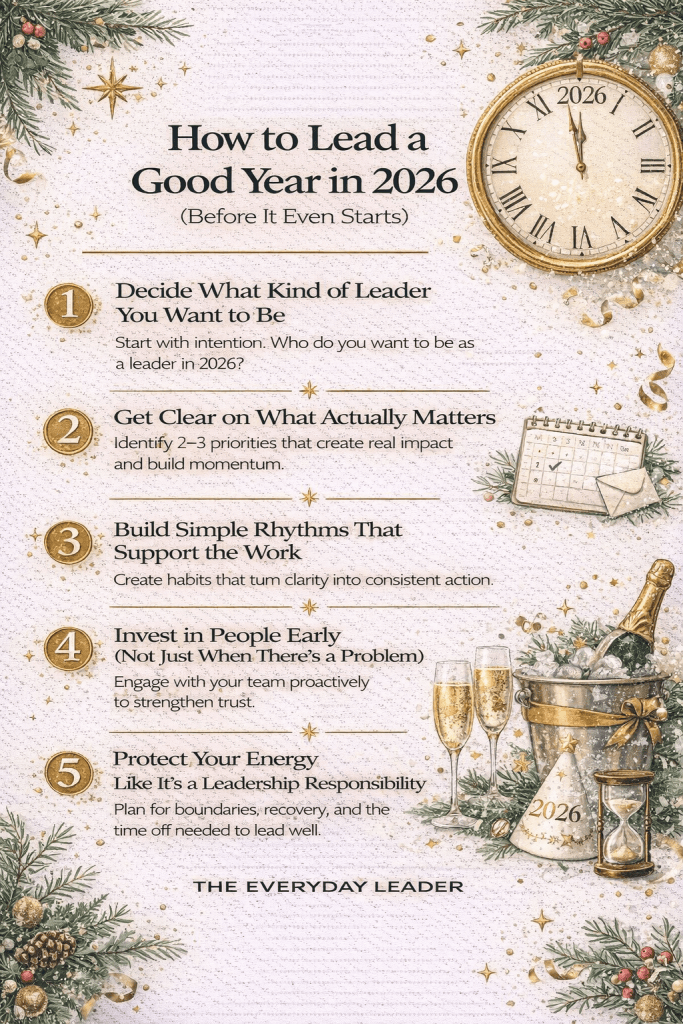
1. Decide What Kind of Leader You Want to Be This Year
Before setting goals, set intention.
Ask yourself:
- How do I want my team to experience me this year?
- What behaviors do I want to be known for?
- What do I want people to say about working with me in 2026?
Clarity about who you are as a leader anchors every decision that follows.
2. Get Clear on What Actually Matters
A good year isn’t about doing more — it’s about doing the right things consistently.
Identify:
- 2–3 priorities that truly move the team forward
- The standards you won’t compromise on
- The work that can be deprioritized or stopped
Focus creates momentum.
Diffusion creates exhaustion.
3. Build Simple Rhythms That Support the Work
Strong years are built on predictable habits, not heroic effort.
Think in rhythms:
- How will you communicate consistently?
- How often will you check in on priorities?
- What meetings actually matter?
- Where will you protect focus time?
Systems reduce decision fatigue — and make progress sustainable.
4. Invest in People Early (Not Just When There’s a Problem)
Don’t wait until performance dips or stress rises to engage deeply with your team.
Start the year by:
- Aligning on expectations
- Understanding individual goals
- Clarifying how feedback will work
- Naming what support looks like
Teams that feel supported early navigate challenges better later.
5. Protect Your Energy Like It’s a Leadership Responsibility
Your energy is not unlimited — and it sets the tone for the team.
Plan for:
- Time off before burnout hits
- Boundaries around availability
- Recovery after intense periods
- Reflection, not just reaction
Sustainable leadership isn’t selfish.
It’s strategic.
The Everyday Leader Takeaway
A good year in 2026 won’t happen by accident.
It’s created when you:
Lead with intention,
Focus on what matters most,
Build simple, steady rhythms,
Invest in people early, and
Protect the energy required to lead well.
Because everyday leaders don’t chase perfect years.
They build strong ones — one clear, consistent choice at a time.


Leave a Reply